
Plumbing Services
Sump Pump Repair & Replacement in Rittman & Akron, OH
Your sump pump is your basement’s first line of defense against flooding—and when it fails, water damage can happen fast. Schar Heating & Cooling provides sump pump repair and replacement for homeowners in Rittman and Akron, OH. Whether your pump has stopped working, isn’t keeping up with heavy rain, or is showing signs of age, we’ll get it diagnosed and taken care of so your basement stays dry and protected.

⚠️ Signs Your Sump Pump Needs Repair or Replacement
- Most homeowners don’t think about their sump pump until something goes wrong—and by then, water may already be coming in. Staying ahead of problems means knowing what to watch for. If you’re noticing any of the following, it’s time to have your pump inspected:
- The pump isn’t turning on when the pit fills with water
- The pump runs constantly, even during dry weather
- Strange noises like grinding, rattling, or humming coming from the pump
- The pump turns on and off repeatedly in short cycles
- Visible rust, corrosion, or damage on the pump or housing
- Water in your basement despite the pump appearing to run
- A musty or damp smell in the basement that wasn’t there before
- The pump is more than 7 to 10 years old
A sump pump that runs but isn’t actually moving water out of the pit is just as much of a problem as one that won’t turn on at all. If your basement feels damp or you’re seeing moisture on the walls or floor even though the pump seems to be working, something isn’t right.
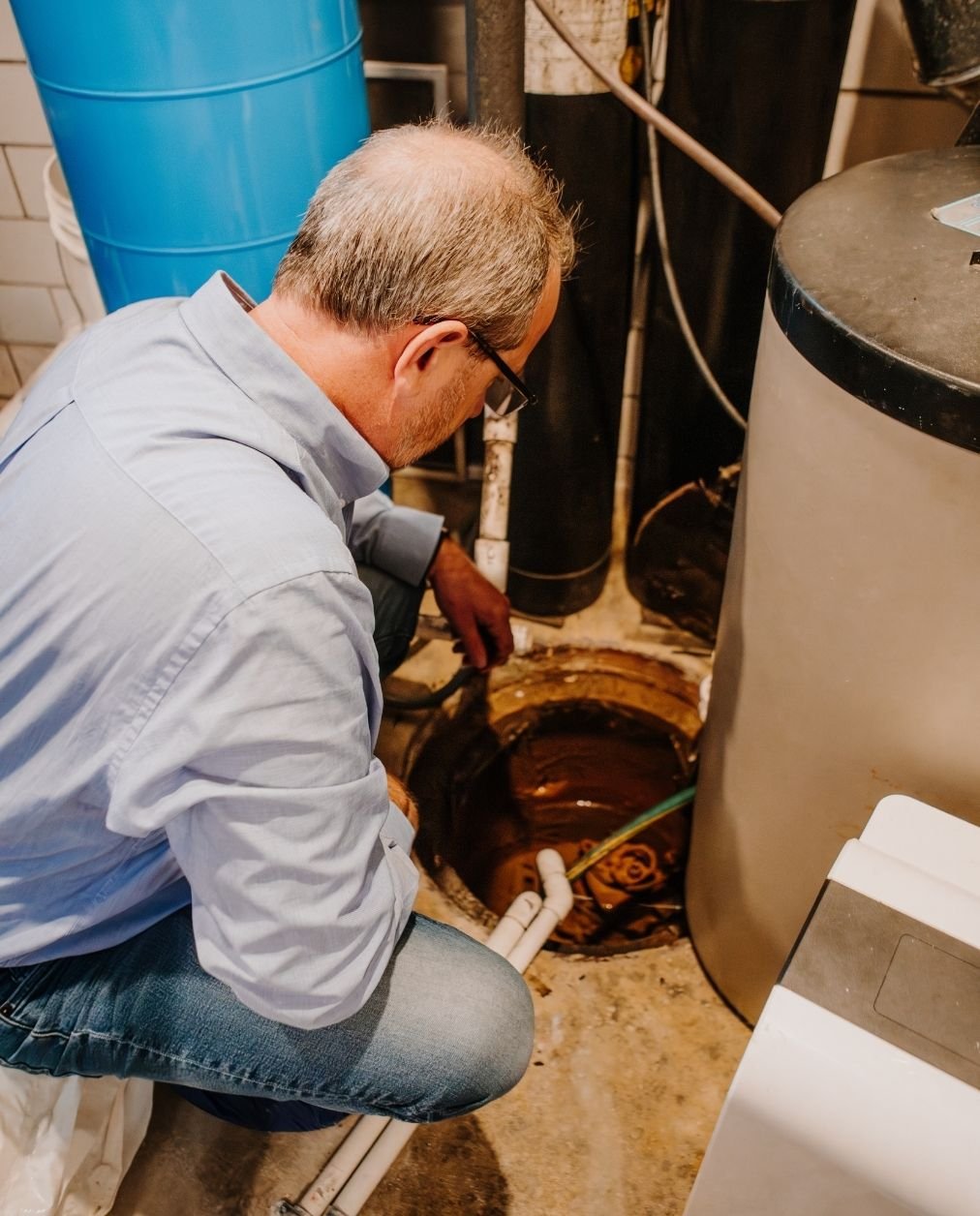
🧰 Our Sump Pump Repair Process
Not every sump pump issue means you need a new unit. Many problems—like a stuck float switch, a clogged discharge line, or a tripped breaker—can be repaired quickly and affordably. Our technicians start by inspecting the full system to figure out exactly why the pump isn’t performing the way it should.
We check the float switch to make sure it’s moving freely and activating the pump at the right water level. We inspect the check valve to confirm water isn’t flowing back into the pit after the pump shuts off. We test the discharge line for clogs or freezing, and we verify that the electrical connection is solid and the pump is receiving power.
If the issue is mechanical or electrical and the pump itself is still in good condition, we’ll make the repair and test the system to confirm it’s working properly. If we find that the motor is failing, the impeller is worn, or the pump has reached the end of its useful life, we’ll let you know and walk you through replacement options—no surprises.
Common repairs we handle include:
- Float switch adjustment or replacement
- Check valve replacement
- Discharge line clearing or rerouting
- Electrical and power connection repairs
- Pit cleaning and debris removal
🔄 When Your Sump Pump Needs to Be Replaced
Sump pumps don’t last forever. Most standard pumps have a lifespan of about 7 to 10 years, depending on how often they run and how well they’ve been maintained. If your pump is aging, struggling to keep up, or has needed multiple repairs in a short period, replacement is usually the smarter investment.
Replacing a failing sump pump before it gives out completely is always better than dealing with a flooded basement. A new pump gives you reliable protection, improved efficiency, and peace of mind heading into Ohio’s wetter months.
There are a few clear situations where replacement makes more sense than another repair:
- The pump motor has burned out or is noticeably weaker than it used to be
- The pump cycles on and off constantly without fully clearing the pit
- Repair costs are approaching half the price of a new unit
- The pump can’t keep up during heavy rain or rapid snowmelt
- The unit is past the 7-to-10-year mark and showing its age
Every replacement includes removal of the old pump, installation of the new unit with proper float switch positioning, a new check valve if needed, and a full operational test to make sure everything activates and drains correctly.
🔍 Choosing the Right Sump Pump for Your Home
Not all sump pumps are the same, and the right one for your home depends on how much water your system needs to handle, how often the pump runs, and whether you want backup protection in case of a power outage.
Submersible sump pumps sit inside the sump pit, fully submerged in water. They’re quieter, more powerful, and better suited for homes that deal with frequent or heavy water intrusion. Because they’re sealed, they’re also less prone to overheating and tend to last longer under heavy use.
Battery backup sump pumps are an add-on that kicks in automatically if your primary pump fails or the power goes out—which is exactly when you’re most likely to need it. Heavy storms that cause flooding are also the most common cause of power outages, so a backup pump can be the difference between a dry basement and a disaster.
Our team will help you choose the right pump based on the volume of water your pit typically collects, how frequently the pump activates, and whether a backup system makes sense for your situation. We install trusted brands and only recommend equipment we stand behind.
🛠️ Keeping Your Sump Pump Ready When You Need It
Your sump pump spends most of its time sitting idle, waiting to do its job. That’s exactly why regular maintenance matters—you need to know it’s going to work when water starts coming in, not find out the hard way that it won’t.
Test your pump every few months. Pour a bucket of water into the pit slowly until the float switch activates. The pump should kick on, move the water out, and shut itself off. If it doesn’t turn on, runs but doesn’t pump water, or doesn’t shut off on its own, something needs attention.
Keep the pit clean. Dirt, gravel, and debris can settle into the sump pit over time and interfere with the float switch or clog the pump intake. Check the pit once or twice a year and remove anything that shouldn’t be there.
Inspect the discharge line. Make sure the line that carries water away from your home is clear and draining properly. In winter, discharge lines can freeze if they’re not properly routed, which causes the pump to run without actually moving water out. Check that the line exits well away from your foundation so the water doesn’t cycle right back in.
Check the check valve. The check valve prevents water in the discharge line from flowing back into the pit after the pump shuts off. If the valve is worn or stuck open, the pump has to work harder and will cycle more frequently, which shortens its lifespan.
Consider a battery backup if you don’t have one. Power outages and heavy storms tend to happen at the same time. If your sump pump is your only line of defense and it’s on a standard electrical circuit with no backup, a single outage during a heavy rain could mean a flooded basement.
❓ Sump Pump Repair & Replacement FAQ
How do I know if my sump pump is working?
The easiest test is to pour water into the pit until the float switch rises. The pump should turn on automatically, pump the water out, and shut off when the pit is empty. If it doesn’t respond, runs without pumping, or won’t shut off, it needs to be looked at.
How long does a sump pump last?
Most standard sump pumps last 7 to 10 years with normal use. Pumps that run frequently—like in homes with high water tables or ongoing groundwater issues—may wear out sooner. Regular testing and maintenance can help you get the full lifespan out of your unit.
My pump runs all the time—is that normal?
Constant running usually means one of a few things: the float switch is stuck, the check valve is failing and water is flowing back into the pit, the pump is undersized for the volume of water it’s handling, or there’s a groundwater issue feeding the pit faster than the pump can keep up. Any of these should be inspected.
Do I need a battery backup sump pump?
If losing power during a storm would leave your basement unprotected, a battery backup is a smart investment. It kicks in automatically when the primary pump loses power or can’t keep up, giving you protection exactly when you’re most vulnerable.
How long does a sump pump replacement take?
A straightforward replacement—pulling the old pump and installing a new one with proper connections—typically takes one to two hours. If the pit, discharge line, or check valve need work at the same time, it may take a bit longer.
Can I replace my sump pump myself?
You can, but getting the float switch height, check valve placement, and discharge routing right matters a lot. An improperly installed pump can fail when you need it most, short-cycle and burn out early, or leave your basement unprotected. Professional installation makes sure it’s set up correctly and tested before you rely on it.
Call Your Local Plumbing Experts Today
Our team of certified experts at Schar can take care of all your home Plumbing needs. Call our Rittman or Akron, OH, office today.